UNK the,. of and in " a to was is) (for as on by he with 's that at from his it an were are which this also be has or: had first one their its new after but who not they have – ; her she ' two been other when there all % during into school time may years more most only over city some world would where later up such used many can state about national out known university united then made Purple Mash is an award-winning website for nursery and primary school children. It enables children to explore and enhance their knowledge in a fun and creative way /04/04 · Corporate anti-corruption initiatives can make a substantial contribution towards curtailing corruption and advancing efforts to achieve the United Nations’ Sustainable Development Goals. However, researchers have observed that underdeveloped assumptions with respect to the conceptualization of corruption and how firms respond to corruption risk impeding the efficacy of anti-corruption
Banana - Wikipedia
A banana is an elongated, edible fruit — botanically a berry [1] [2] — produced by several kinds of large herbaceous flowering plants in the genus Musa. The fruit is variable in size, color, and firmness, but is usually elongated and curved, with soft flesh rich in starch covered with a rind, which may be green, yellow, red, purple, or brown when ripe.
The fruits grow in clusters hanging from the top of the plant. Almost all modern edible seedless parthenocarp bananas come from two wild species — Musa acuminata and Musa balbisiana. The scientific names of most cultivated bananas are Musa acuminataMusa balbisianaand Musa × paradisiaca for the hybrid Musa acuminata × M. balbisianadepending on their genomic constitution. The old scientific name for this hybrid, Musa sapientumis no longer used. Musa species are native to tropical Fairtrade binary options and Australiaand are likely to have been first domesticated in Papua New Guinea.
Worldwide, there is no sharp distinction between "bananas" and "plantains". Especially in the Americas and Europe, "banana" usually refers to soft, sweet, dessert bananas, particularly those of the Cavendish groupwhich are the main exports from banana-growing countries.
By contrast, Musa cultivars with firmer, starchier fruit are called "plantains". In other regions, such as Southeast Asiamany more kinds of banana are grown and eaten, so the binary distinction is not useful and is not made in local languages. The term "banana" is also used as the common name for the plants that produce the fruit. It can also refer to members of the genus Ensetesuch as the snow banana Ensete glaucum and the economically important false banana Ensete ventricosum.
Both genera are in the banana family, Musaceae, fairtrade binary options. Banana 'tree' showing fruit and inflorescence. The banana plant is the largest herbaceous flowering plant.
Bananas grow in fairtrade binary options wide variety of soils, fairtrade binary options, as long as the soil is at least 60 centimetres 2. The base of the petiole widens to form a sheath; the tightly packed sheaths make up the pseudostem, fairtrade binary options, which is all that supports the plant.
The edges of the sheath meet when it is first produced, making it tubular. As new growth occurs in the centre of the pseudostem the edges are forced apart. Most are around 5 m 16 ft tall, with a range from 'Dwarf Cavendish' plants at fairtrade binary options 3 m 10 ft to 'Gros Michel' at 7 m 23 ft or more. When a banana plant is mature, the corm stops producing new leaves and begins to form a flower spike or inflorescence.
A stem develops which grows up inside the pseudostem, carrying the immature inflorescence until eventually it emerges at the top. More are sometimes produced; an exceptional plant in the Philippines produced five. In the plantation system of cultivation, only one of the offshoots will be allowed to develop in order to maintain spacing. The female flowers which can develop into fruit appear in rows further up the stem closer to the leaves from the rows of male flowers. The ovary is inferiorfairtrade binary options, meaning that the tiny petals and other flower parts appear at the tip of the ovary, fairtrade binary options.
The banana fruits develop from the banana heart, in a large hanging cluster, made up of tiers called "hands"with up to 20 fruit to a tier. The hanging cluster is known as a bunch, comprising 3—20 tiersor commercially as a "banana stem", and can weigh 30—50 kilograms 66— lb, fairtrade binary options. The fruit has been described as a "leathery berry".
The inner part of the common yellow dessert variety can be split lengthwise into three sections that correspond to the inner portions of the three carpels by manually deforming the unopened fruit. As with all living things on earth, potassium-containing bananas emit radioactivity at very low levels occurring naturally from potassium 40 K or K[22] which is one of several isotopes of potassium.
The word banana is thought to be of West African origin, fairtrade binary options, possibly from the Wolof word banaanaand passed into English via Spanish fairtrade binary options Portuguese. The genus Musa was created by Carl Linnaeus in Musa is in the family Musaceae. The APG III system assigns Musaceae to the order Zingiberalespart of the commelinid clade of the monocotyledonous flowering plants. Some 70 species of Musa were recognized by the World Checklist of Selected Plant Families as of January [update] ; [29] several produce edible fruit, while others are cultivated as ornamentals.
The classification of cultivated bananas has long been a problematic issue for taxonomists. Linnaeus originally placed bananas into two species based only on their uses as food: Musa sapientum for dessert bananas and Musa paradisiaca fairtrade binary options plantains.
More species names were added, but this approach proved to be inadequate for the number of cultivars in the primary center of diversity of the genus, Southeast Asia. Many of these cultivars were given names that were later discovered to be synonyms. In a series of papers published from onwards, Ernest Cheesman showed that Linnaeus's Musa sapientum and Musa paradisiaca were cultivars and descendants of two wild seed-producing species, fairtrade binary options, Musa acuminata and Musa balbisianaboth first described by Luigi Aloysius Colla.
This system eliminated almost all the difficulties and inconsistencies of the earlier classification of bananas based on assigning scientific names to cultivated varieties. Despite this, the original names are still recognized by some authorities, fairtrade binary options, leading to confusion, fairtrade binary options. The accepted scientific names for most groups of cultivated bananas are Musa acuminata Colla and Musa balbisiana Colla for the ancestral species, and Musa × paradisiaca L.
for the hybrid M. acuminata × M. Synonyms of M, fairtrade binary options. Generally, modern classifications of banana cultivars follow Simmonds and Shepherd's system. Cultivars are placed in groups based on the number of chromosomes they have and which species they are derived from. Thus the Latundan banana is placed in fairtrade binary options AAB Group, fairtrade binary options that it is a triploid derived from both M.
acuminata A and M. balbisiana B. For a list of the cultivars classified under this system, see " List of banana cultivars ". Ina team of scientists announced they had achieved a draft sequence of the genome of Musa acuminata.
In regions such as Fairtrade binary options America and Europe, Musa fruits offered for sale can be divided into "bananas" and " plantains ", based on their intended use as food. Thus the banana producer and distributor Chiquita produces publicity material for the American market which says that "a plantain is not a banana".
The stated differences are that plantains are more starchy and less sweet; they are eaten cooked rather than raw; they have thicker skin, which may be green, yellow or black; and they can be used at any stage of fairtrade binary options. They are described by Ploetz et al. as "true" plantains, distinct from other cooking bananas.
An alternative approach divides bananas fairtrade binary options dessert bananas and cooking bananas, with plantains being one of the subgroups of cooking bananas. acuminata are examples of "dessert bananas", whereas triploid cultivars derived from the hybrid between M. acuminata and M. balbinosa in particular the plantain subgroup of the AAB Group are "plantains".
A study of these cultivars showed that they could be placed into at least three groups based on their characteristics: dessert bananas, non-plantain cooking bananas, fairtrade binary options, and plantains, although there were overlaps between dessert and cooking bananas. In Southeast Asia — the center of fairtrade binary options for bananas, both wild and cultivated — the distinction between "bananas" and "plantains" fairtrade binary options not work, according to Valmayor et al.
Many bananas are used both raw and cooked. There are starchy fairtrade binary options bananas which are smaller than those eaten raw. The range of colors, sizes and shapes is far wider than in those grown or sold in Africa, Europe or the Americas. Thus both Cavendish cultivarsthe classic yellow dessert bananas, and Saba cultivarsused mainly for cooking, are called pisang in Malaysia and Indonesia, kluai in Thailand and chuoi in Vietnam.
Most Fe'i bananas are cooked, but Karat bananaswhich are short and squat with bright red skins, very different from the usual yellow dessert bananas, are eaten raw.
In summary, in commerce in Europe and the Americas although not in small-scale cultivationfairtrade binary options, it is possible to distinguish between "bananas", which are eaten raw, and "plantains", fairtrade binary options, which are cooked. In other regions of the world, particularly India, Southeast Asia and the islands of the Pacific, there are many more kinds of banana and the two-fold distinction is not useful and not made fairtrade binary options local languages.
Plantains are one of many kinds of cooking bananas, which are not always distinct from dessert bananas. An article on Banana tree cultivation is brought down in Ibn al-'Awwam 's 12th-century agricultural work, Book on Agriculture. The earliest domestication of bananas Musa spp. were initially from naturally occurring parthenocarpic seedless individuals of Musa acuminata banksii in New Guinea. These were cultivated by Papuans before the arrival of Austronesian-speakers.
Numerous phytoliths of bananas have been recovered from the Kuk Swamp archaeological site and dated to around 10, to 6, BP. From New Guinea, cultivated bananas spread westward into Island Southeast Asia through proximity not migrations.
They hybridized with other possibly independently domesticated subspecies of Musa acuminata as well as Musa balbisiana in the Philippines, northern New Guinea, and possibly Halmahera.
These hybridization events produced the triploid cultivars of bananas commonly grown today. From Island Southeast Asia, they became part of the staple crops of Austronesian peoples and were spread during their voyages and ancient maritime trading routes into Oceania, fairtrade binary options, East AfricaSouth Asiaand Indochina. These ancient introductions resulted in the banana subgroup now known as the "true" plantainswhich include the East African Highland bananas and the Pacific plantains the Iholena and Maoli-Popo'ulu subgroups.
East African Fairtrade binary options bananas originated from banana populations introduced fairtrade binary options Madagascar probably from the region between JavaBorneoand New Guinea ; while Pacific plantains were introduced to the Pacific Islands from either eastern New Guinea or the Bismarck Archipelago. Phytolith discoveries in Cameroon dating to the first millennium BCE [53] triggered an as yet unresolved debate about the date of first cultivation in Africa.
There is linguistic evidence that bananas were known in Madagascar around that time. A second wave of introductions later spread bananas to other parts of tropical Asiafairtrade binary options, particularly Indochina and the Indian Subcontinent.
This may be a possible indication of very early dispersal of bananas by Austronesian traders by sea from as early as BCE. But this is still putative, fairtrade binary options, as they may have come from local wild Musa species used for fiber or as ornamentals, not food. Southeast Asia remains the region of primary diversity of the banana. Areas of secondary fairtrade binary options are found in Africa, fairtrade binary options, indicating a long history of banana cultivation in these regions.
The banana may also have been present in isolated locations elsewhere in the Middle East on the eve of Islam. The spread of Islam was followed by far-reaching diffusion. There are numerous references to it in Islamic texts such as fairtrade binary options and hadiths beginning in the 9th century. By the 10th century the banana appears in texts from Palestine and Egypt. From there it diffused into North Africa and Muslim Iberia.
During the medieval ages, bananas from Granada were considered among the best in the Arab world.
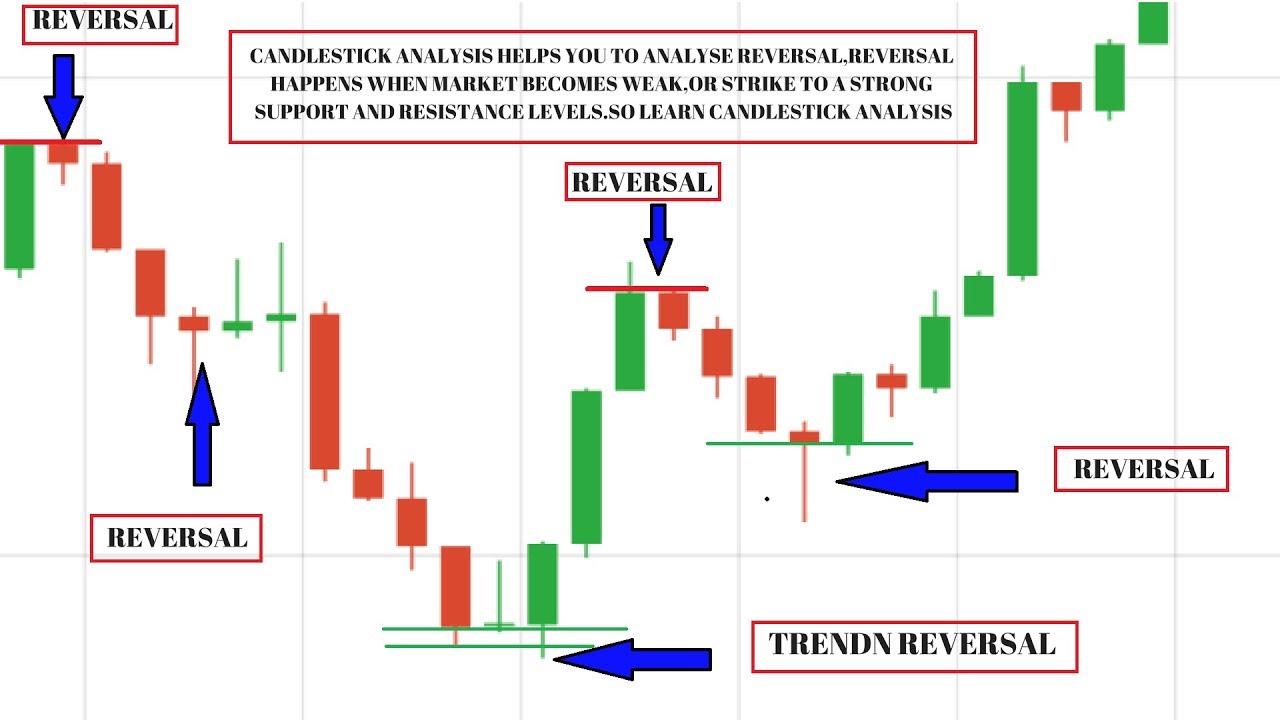
Best Binary Options Strategy 2020 - 2 Minute Strategy LIVE TRAINING!
, time: 43:42
Government debt, also known as public interest, public debt, national debt and sovereign debt, is the total amount of debt owed at a point in time by a government or state to lenders. Government debt can be owed to lenders within the country (also described as internal debt) or owed to foreign lenders (external debt).Government debt contrasts to the annual government budget deficit, which is a ALL YOUR PAPER NEEDS COVERED 24/7. No matter what kind of academic paper you need, it is simple and affordable to place your order with My Essay Gram a aa aaa aaaa aaacn aaah aaai aaas aab aabb aac aacc aace aachen aacom aacs aacsb aad aadvantage aae aaf aafp aag aah aai aaj aal aalborg aalib aaliyah aall aalto aam

No comments:
Post a Comment